Why Your Eye Health Changes Every Decade of Life
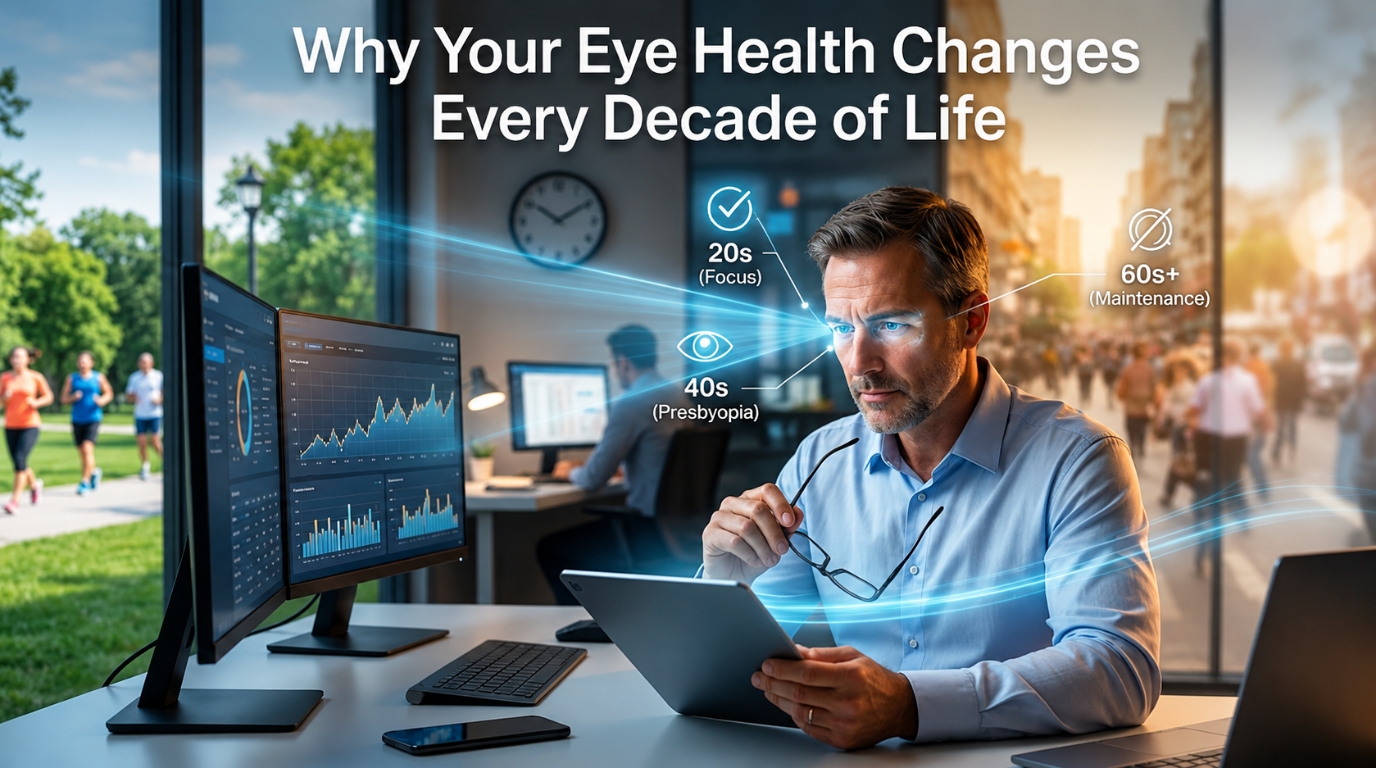
Your eyes undergo natural changes throughout life, just like the rest of your body. While some vision changes are a normal part of aging, others may indicate underlying eye conditions that require professional attention. Understanding what to expect in each decade can help you take proactive steps to maintain healthy vision and reduce the risk of eye diseases. From increased screen time in your 20s to age-related eye conditions in later years, every stage of life presents unique challenges and opportunities for eye care.
Eye Health in Your 20s: Building Healthy Habits
For many people, their 20s are a time of excellent eye health. However, modern lifestyles often involve prolonged use of computers, smartphones, and tablets, which can lead to digital eye strain.
Common concerns during this decade include:
-
- Dry or irritated eyes after long hours of screen use
- Blurred vision from prolonged focus
- Eye fatigue and headaches
- Contact lens-related discomfort
Healthy habits to adopt include:
-
- Following the 20-20-20 rule by looking at something 20 feet away every 20 minutes for at least 20 seconds
- Wearing sunglasses that block UVA and UVB rays
- Eating a balanced diet rich in leafy greens, fish, citrus fruits, and colorful vegetables
- Scheduling routine eye examinations, even if your vision seems normal
Eye Health in Your 30s: Managing Lifestyle Demands
Busy work schedules and family responsibilities can make eye care less of a priority. Many people continue to experience digital eye strain, while some may notice subtle changes in their vision.
During your 30s, you may experience:
-
- Increased eye fatigue after screen use
- Dry eyes caused by air conditioning, prolonged device use, or hormonal changes
- Minor changes in prescription lenses
This is also an ideal time to monitor overall health. Conditions such as diabetes and high blood pressure can affect the blood vessels in the eyes, making regular health check-ups an important part of protecting your vision.
Eye Health in Your 40s: Noticeable Vision Changes
The 40s often bring the first significant age-related changes in vision. Many people develop presbyopia, a condition that gradually reduces the eye’s ability to focus on nearby objects.
Common symptoms include:
-
- Difficulty reading small print
- Holding books or phones farther away
- Increased need for brighter lighting
- Frequent eye strain while reading
Regular comprehensive eye exams become increasingly important during this decade, as they can detect early signs of glaucoma, cataracts, and other eye diseases before noticeable symptoms develop.
Eye Health in Your 50s: Monitoring Age-Related Conditions
As you enter your 50s, the risk of developing age-related eye conditions increases. While not everyone experiences these conditions, early detection significantly improves treatment outcomes.
Conditions that become more common include:
-
- Cataracts
- Dry eye disease
- Glaucoma
- Diabetic eye disease
- Early age-related macular degeneration
Healthy lifestyle choices continue to play an important role. Maintaining a balanced diet, staying physically active, avoiding smoking, and controlling blood sugar and blood pressure all contribute to long-term eye health.
Eye Health in Your 60s and Beyond
Vision changes often become more noticeable after age 60. Reading, driving at night, and adapting to changes in lighting may become more challenging.
Older adults should be aware of symptoms such as:
-
- Sudden vision loss
- Persistent flashes of light
- New floaters
- Distorted central vision
- Reduced peripheral vision
These symptoms require prompt medical evaluation, as they may indicate serious eye conditions requiring immediate treatment.
Routine eye examinations also become increasingly important because many eye diseases progress without pain or obvious symptoms in their early stages.
Everyday Habits That Protect Your Vision
No matter your age, certain habits can support lifelong eye health:
-
- Wear UV-protective sunglasses outdoors.
- Eat foods rich in vitamins A, C, E, zinc, lutein, and omega-3 fatty acids.
- Limit smoking and excessive alcohol consumption.
- Stay physically active to support healthy blood circulation.
- Get enough sleep to reduce eye fatigue.
- Practice good screen habits and blink regularly during device use.
- Schedule routine comprehensive eye examinations based on your eye care professional’s recommendations.
Frequently Asked Questions
At what age do eyesight changes usually begin?
Many adults notice the first age-related vision changes in their early to mid-40s, particularly difficulty focusing on nearby objects due to presbyopia.
Can healthy habits prevent age-related eye diseases?
While healthy habits cannot completely prevent every eye condition, they can reduce the risk of certain diseases and help maintain overall eye health.
How often should adults have an eye examination?
The recommended frequency depends on age, overall health, family history, and existing eye conditions. Your eye care professional can advise an appropriate schedule based on your individual needs.
Does screen time permanently damage eyesight?
Current evidence suggests that prolonged screen use does not permanently damage eyesight, but it can contribute to digital eye strain, dry eyes, headaches, and temporary blurred vision.
Quick Enquiry
Vision Care
- 10 Effective Ways to Protect Your Eyes from Sun Damage
- 5 Symptoms of Sun-Induced Eye Conditions That Require Medical Attention
- Beyond Sunglasses: Alternative Methods to Shield Your Eyes from the Sun
- Exploring the Advantages of Glaucoma Treatment in Dubai
- Exploring the Root Causes of Glaucoma
- How Intravitreal Injections Help Manage Diabetic Retinopathy
- How Intravitreal Injections Help Manage Diabetic Retinopathy
- How to Choose the Right Sunglasses for Maximum Eye Protection
- How to Choose UV-Protective Contact Lenses for Sun Safety
- How to Protect Your Eyes from the Sun While Driving
- How Your Heart Affects Your Eyes: The Hidden Connection
- Questions to Ask Your Ophthalmologist About Diabetic Retinopathy
- Recovery and Healing: What to Expect After Microincision Cataract Surgery
- Red Eyes After Sun Exposure: Should You Visit an Eye Specialist?
Author
Dr. Vasu Kumar
Vitreoretinal Surgeon | Head of Ophthalmology, NMC Royal Hospital FACS | FICO | FAICO
With expertise in vitreoretinal surgery and advanced eye care, he combines clinical experience with a patient-focused approach to managing complex retinal conditions. His work is centered on protecting vision, delivering precise treatment, and helping patients achieve better long-term eye health.