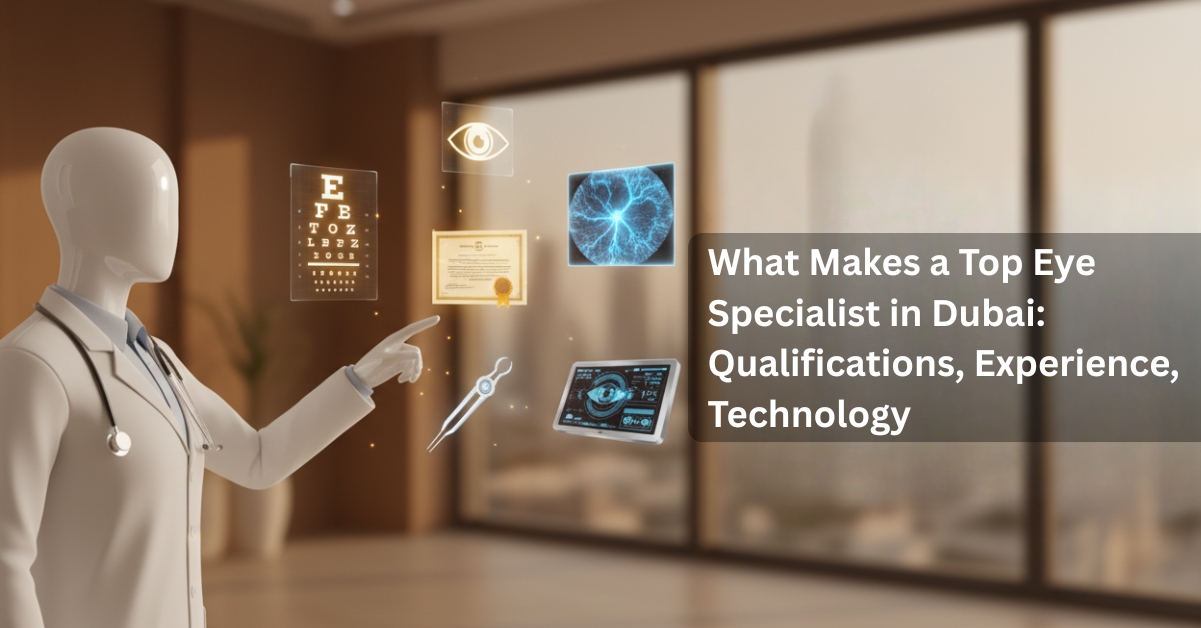
What Makes a Top Eye Specialist in Dubai: Qualifications, Experience, Technology
Spread the love
Selecting the best eye specialist in Dubai involves evaluating credentials, surgical experience, diagnostic capabilities, and clinical approach. Vision is essential, and retinal diseases progress quickly, making informed decision-making critical.
Medical and Surgical Qualifications
A top ophthalmologist should have:
formal ophthalmology degree and vitreoretinal specialization
Qualifications establish professional readiness, but expertise is refined through hands-on cases and research involvement.
Experience and Case Diversity
Clinical confidence grows through managing complex patient scenarios including retinal detachments, diabetic retinal disease, trauma-induced vision loss, and cataract cases requiring combined retinal evaluation.
A leading specialist should be capable of coordinating multidisciplinary care where systemic illnesses influence ocular health.
Diagnostic and Surgical Technology
Modern retina care depends on imaging accuracy. A top eye specialist integrates diagnostic platforms including OCT, angiography, laser therapy, microincision vitrectomy tools, and wide-field retinal photography.
Technology improves:
diagnostic precision
targeting accuracy during treatment
procedure safety
postoperative monitoring
Patient-Centered Communication
A high-quality ophthalmologist explains clinical findings and treatment recommendations in clear terms and provides realistic expectations.
Key attributes include:
transparency in medical risks
focus on clinical necessity rather than commercial influence
personalized treatment planning
structural follow-up care
Why Choosing the Right Specialist Matters
Untreated eye diseases may progress rapidly and cause irreversible damage. Early diagnosis and correct intervention from a skilled specialist ensure long-term protection of visual function.
FAQs
How do I evaluate whether a specialist is qualified?
Review training, certifications, experience level, surgical volume, and hospital affiliations.
Why is retinal imaging important?
It detects microscopic structural changes early, supporting effective treatment planning.
Should cost be the deciding factor?
Clinical expertise, technology, and medical necessity should take precedence over price alone.
Vitreoretinal Surgeon | Head of Ophthalmology, NMC Royal Hospital
FACS | FICO | FAICO
With expertise in vitreoretinal surgery and advanced eye care, he combines clinical experience with a patient-focused approach to managing complex retinal conditions. His work is centered on protecting vision, delivering precise treatment, and helping patients achieve better long-term eye health.