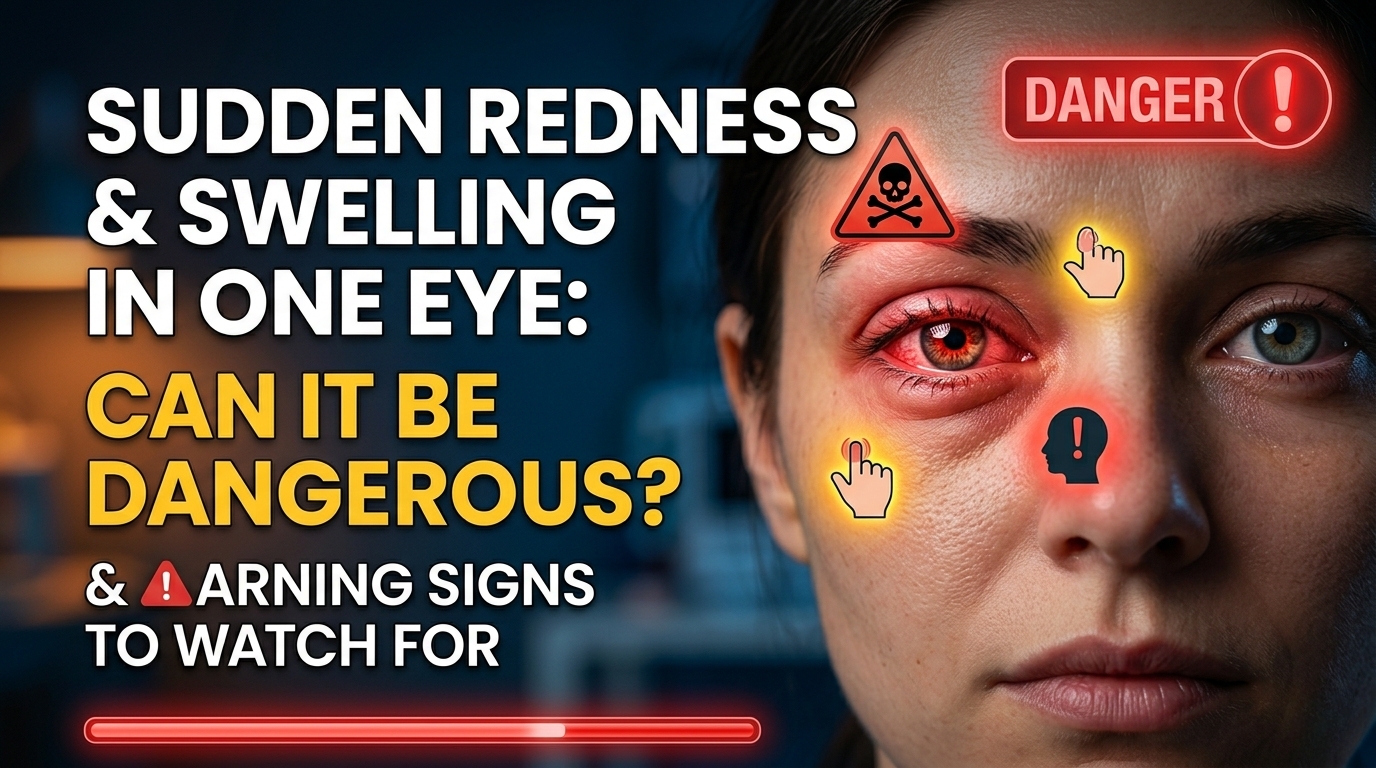
Sudden Redness and Swelling in One Eye: Can It Be Dangerous?
Spread the love
Sudden redness and swelling in one eye can happen for many reasons. Sometimes the cause is minor, such as irritation or an allergy. In other cases, it may be a sign of infection, inflammation, injury, or a condition that needs urgent treatment. Because only one eye is affected, it is especially important not to ignore the symptoms or assume they will resolve on their own.
The key question is not just whether the eye looks red—it is whether the redness is accompanied by pain, vision changes, discharge, or increasing swelling.
Common Causes of Redness and Swelling in One Eye
Allergy or Irritation
Dust, smoke, cosmetics, pollen, or environmental triggers can irritate one eye more than the other.
Possible symptoms:
Itching
Mild swelling
Watering
Temporary redness
This may improve once the trigger is removed, but repeated symptoms should be evaluated.
Conjunctivitis (Pink Eye)
An infection or inflammation of the outer eye surface can begin in one eye and sometimes spread.
Possible symptoms:
Redness
Sticky discharge
Burning
Swollen eyelids
Watering
Medical treatment may be needed depending on the cause.
Stye or Eyelid Infection
A blocked gland or bacterial infection near the eyelid can create localized swelling and tenderness.
Possible symptoms:
Painful lump on eyelid
Swelling near lashes
Redness
Tenderness to touch
Dry Eye and Eye Rubbing
Severe dryness or frequent rubbing can inflame tissues and cause temporary redness or puffiness.
Injury or Foreign Body
Dust, a small particle, accidental scratching, or trauma can affect one eye suddenly.
Possible symptoms:
Sharp discomfort
Tearing
Light sensitivity
Feeling that something is in the eye
Deeper Infection or Inflammation
Some internal eye conditions can become serious quickly.
Possible symptoms:
Pain
Blurred vision
Significant swelling
Light sensitivity
Reduced eye movement comfort
These require urgent medical attention.
Warning Signs That Need Immediate Eye Care
Sudden redness and swelling in one eye can be dangerous if you also notice:
Eye pain
Blurred or reduced vision
Sensitivity to light
Thick discharge
Fever
Increasing swelling
Difficulty opening the eye
Headache with eye symptoms
Double vision
Recent injury or chemical exposure
These symptoms should be assessed promptly by an eye specialist.
What You Should Avoid
If one eye suddenly becomes red and swollen, avoid:
Rubbing the eye
Sharing towels or makeup
Using old or random eye drops
Wearing contact lenses
Ignoring worsening symptoms
Self-medicating without diagnosis
Incorrect treatment can sometimes worsen the condition.
What an Eye Examination May Include
To identify the cause, a specialist may perform:
Vision testing
External eye and eyelid examination
Slit-lamp evaluation
Eye pressure check if needed
Cornea assessment
Retina or internal eye review when indicated
Medical history review
This helps determine whether the issue is mild irritation or something more serious.
Why Early Evaluation Matters
Many eye problems respond well when treated early. Delaying care can increase discomfort and, in some cases, risk complications affecting vision. Even if symptoms seem mild at first, rapid change in one eye deserves attention.
Many patients seek prompt evaluation from experienced specialists such as Dr. Vasu Kumar for sudden redness, swelling, pain, or unexplained eye discomfort.
Vitreoretinal Surgeon | Head of Ophthalmology, NMC Royal Hospital
FACS | FICO | FAICO
With expertise in vitreoretinal surgery and advanced eye care, he combines clinical experience with a patient-focused approach to managing complex retinal conditions. His work is centered on protecting vision, delivering precise treatment, and helping patients achieve better long-term eye health.