Saving on Eye Care: Bargains and Risks
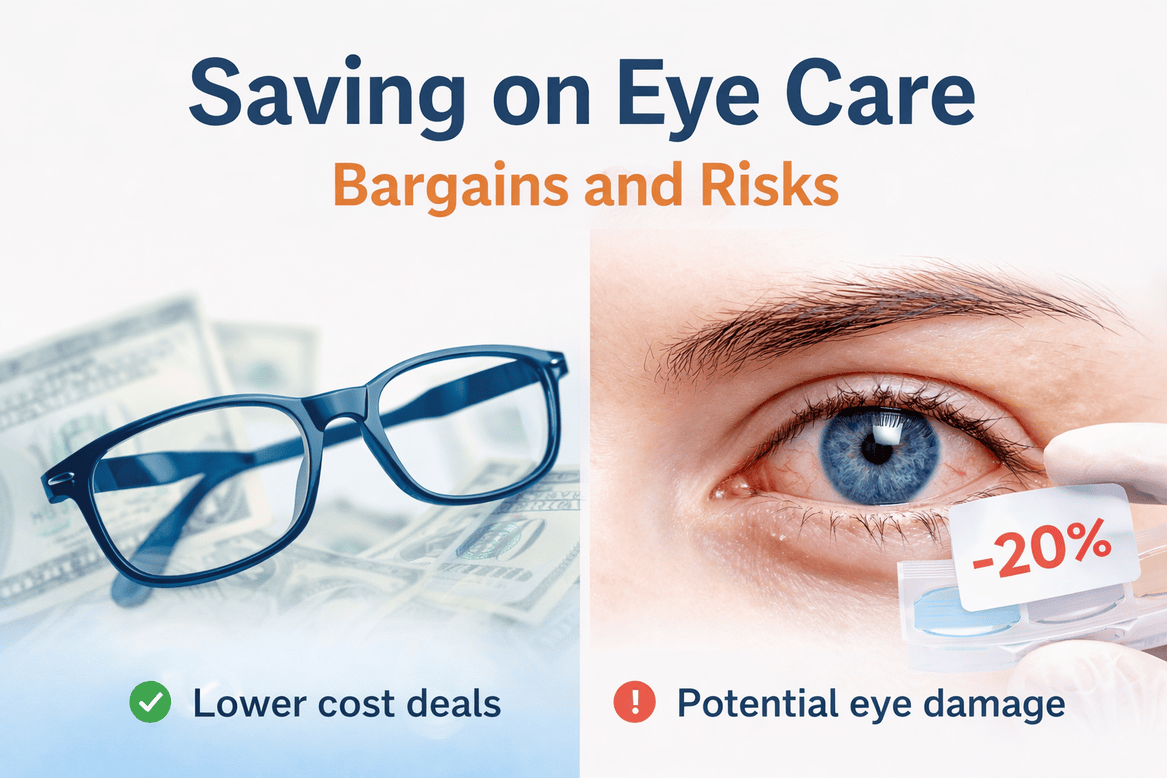
Everyone loves a good deal.
Discounts, combo offers, online steals—it feels smart to save money wherever possible. But when it comes to eye care, the equation isn’t always that simple. Because what looks like a small saving today can sometimes turn into a much bigger cost tomorrow.
Vision is not just about seeing clearly—it’s about detecting what you can’t see yet.
Many budget eye care options focus only on basic vision testing—checking your number and prescribing glasses. While that may solve immediate clarity issues, it often skips a critical part of eye care: a detailed evaluation of eye health. Conditions like glaucoma, retinal disorders, or even early signs of systemic diseases such as hypertension and diabetes can go completely unnoticed in a quick, low-cost check.
This is where the difference between “cheap” and “value-driven” care becomes important.
Because in eye care, what you don’t check is often more dangerous than what you correct.
Another growing trend is ordering glasses or contact lenses online. While convenient, these options rely heavily on self-reported measurements and outdated prescriptions. Even a slight inaccuracy in lens power or alignment can lead to headaches, eye strain, dizziness, and long-term discomfort. Proper fitting, pupillary distance measurement, and lens customization are not just technicalities—they directly affect how well you see and feel.
And then comes self-medication.
Many people use over-the-counter eye drops for redness, irritation, or dryness without understanding the underlying cause. While these may provide temporary relief, they can mask symptoms of deeper issues such as infections, allergies, or even early-stage disease. In some cases, prolonged or incorrect use can worsen the condition.
So the real question isn’t “How much can I save?” but rather “What am I risking?”
Where you should be careful while trying to save on eye care:
- Avoid incomplete eye exams that focus only on glasses, not eye health
- Be cautious with online eyewear without proper fitting and verification
- Don’t self-medicate with eye drops without professional advice
- Check credentials and technology used at low-cost clinics
- Prioritize preventive check-ups over emergency treatments later
Smart savings in eye care are not about choosing the cheapest option—they are about choosing the right one.
There are ways to be cost-conscious without compromising quality. Many reputable clinics offer preventive care packages, bundled screenings, or insurance-supported consultations. Regular check-ups, in fact, reduce long-term costs by identifying issues early—before they require complex and expensive treatments.
Think of it this way: early-stage treatment is always simpler, safer, and more affordable than late-stage intervention.
Modern eye care is highly advanced, especially in specialized fields like retina care. Detecting a problem at the right time can mean the difference between a simple outpatient procedure and a vision-threatening condition requiring intensive treatment.
And unlike many other health concerns, vision loss often cannot be fully reversed once it progresses.
So while it’s completely reasonable to look for value, eye care is one area where cutting corners is rarely worth it.
Because your eyes don’t just help you see the world—they define how you experience it.
Choosing the right care today ensures that your vision remains clear, comfortable, and protected for years to come.
Quick Enquiry
Vision Care
- 10 Effective Ways to Protect Your Eyes from Sun Damage
- 5 Symptoms of Sun-Induced Eye Conditions That Require Medical Attention
- Beyond Sunglasses: Alternative Methods to Shield Your Eyes from the Sun
- Exploring the Advantages of Glaucoma Treatment in Dubai
- Exploring the Root Causes of Glaucoma
- How Intravitreal Injections Help Manage Diabetic Retinopathy
- How Intravitreal Injections Help Manage Diabetic Retinopathy
- How to Choose the Right Sunglasses for Maximum Eye Protection
- How to Choose UV-Protective Contact Lenses for Sun Safety
- How to Protect Your Eyes from the Sun While Driving
- How Your Heart Affects Your Eyes: The Hidden Connection
- Questions to Ask Your Ophthalmologist About Diabetic Retinopathy
- Recovery and Healing: What to Expect After Microincision Cataract Surgery
- Red Eyes After Sun Exposure: Should You Visit an Eye Specialist?
Author
Dr. Vasu Kumar
Vitreoretinal Surgeon | Head of Ophthalmology, NMC Royal Hospital FACS | FICO | FAICO
With expertise in vitreoretinal surgery and advanced eye care, he combines clinical experience with a patient-focused approach to managing complex retinal conditions. His work is centered on protecting vision, delivering precise treatment, and helping patients achieve better long-term eye health.