Lazy Eye (Amblyopia)
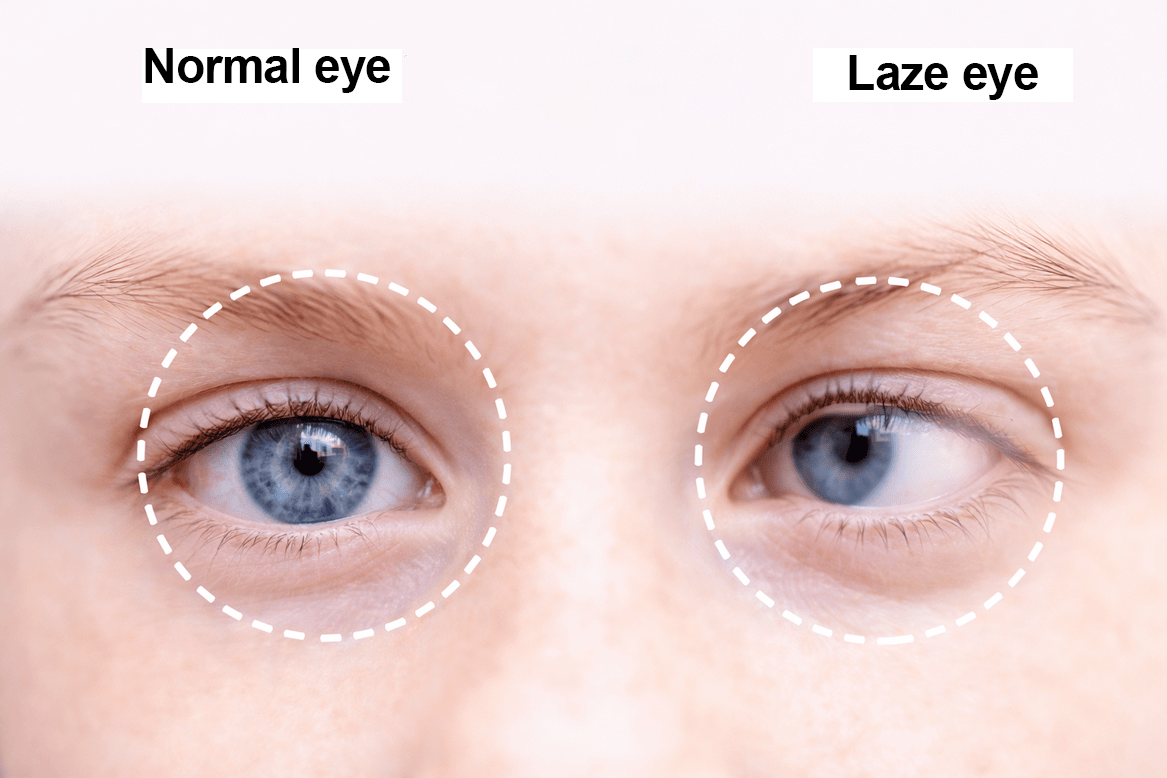
Sometimes, the problem isn’t in the eye—it’s in how the brain chooses to use it.
A child may have two perfectly normal-looking eyes, yet one of them isn’t contributing effectively to vision. There’s no redness, no pain, no obvious complaint. Everything appears fine on the surface. But behind the scenes, the brain has quietly started favoring one eye while ignoring the other.
This condition is known as amblyopia, or more commonly, lazy eye.
Unlike most eye problems, amblyopia is not caused by damage or disease in the eye itself. It is a developmental issue, where the connection between the eye and the brain doesn’t form properly during early childhood. When one eye provides clearer or more aligned images than the other, the brain naturally begins to rely on that stronger eye. Over time, the weaker eye becomes underused—and its visual ability gradually declines.
What makes amblyopia particularly challenging is how easily it goes unnoticed.
Children rarely complain because they continue to see clearly through the stronger eye. Parents may not observe anything unusual unless the condition is associated with visible misalignment (like squinting). As a result, many cases are only discovered during routine eye examinations—or worse, much later when treatment becomes more difficult.
And this is where timing becomes critical.
Amblyopia develops during the early years of visual development, typically before the age of 7–8. This is also the window during which treatment is most effective. Beyond this period, the brain’s visual pathways become less flexible, making full correction significantly harder.
Key things parents should understand and act on:
- Early eye screening (before age 5) is essential, even if no symptoms are visible
- Watch for subtle signs like squinting, head tilting, poor depth perception, or eye drifting
- Uncorrected refractive errors (difference in power between eyes) are a common cause
- Eye misalignment (strabismus) can lead to suppression of one eye
- Delayed treatment can result in permanent vision loss in the weaker eye
These are not warning signs to wait for—they are reasons to act early.
The encouraging part is that amblyopia is one of the most treatable vision conditions when detected at the right time. Treatment does not usually involve surgery. Instead, it focuses on training the brain to use the weaker eye.
This may include prescribing glasses to correct refractive errors, using an eye patch over the stronger eye to force the weaker one to work, or special eye drops that temporarily blur vision in the dominant eye. In some cases, vision therapy exercises are recommended to improve coordination and focusing ability.
While these treatments may seem simple, consistency is key. Children may initially resist patching or therapy, but with proper guidance and encouragement, outcomes can be highly successful.
Another important factor is follow-up. Vision improvement in amblyopia is gradual and requires monitoring to ensure both eyes develop balanced visual function.
Parents should also understand that amblyopia is not just about eyesight—it can affect depth perception, hand-eye coordination, and even confidence in daily activities if left untreated.
The difference between early and late detection is significant.
When identified early, a child can achieve normal or near-normal vision. When missed, the impact can be lifelong.
Which is why amblyopia is not a condition to react to—it is a condition to look for proactively.
Because sometimes, the eye that seems “lazy” just needs the right opportunity to be seen—and used—properly.
Quick Enquiry
Vision Care
- 10 Effective Ways to Protect Your Eyes from Sun Damage
- 5 Symptoms of Sun-Induced Eye Conditions That Require Medical Attention
- Beyond Sunglasses: Alternative Methods to Shield Your Eyes from the Sun
- Exploring the Advantages of Glaucoma Treatment in Dubai
- Exploring the Root Causes of Glaucoma
- How Intravitreal Injections Help Manage Diabetic Retinopathy
- How Intravitreal Injections Help Manage Diabetic Retinopathy
- How to Choose the Right Sunglasses for Maximum Eye Protection
- How to Choose UV-Protective Contact Lenses for Sun Safety
- How to Protect Your Eyes from the Sun While Driving
- How Your Heart Affects Your Eyes: The Hidden Connection
- Questions to Ask Your Ophthalmologist About Diabetic Retinopathy
- Recovery and Healing: What to Expect After Microincision Cataract Surgery
- Red Eyes After Sun Exposure: Should You Visit an Eye Specialist?
Author
Dr. Vasu Kumar
Vitreoretinal Surgeon | Head of Ophthalmology, NMC Royal Hospital FACS | FICO | FAICO
With expertise in vitreoretinal surgery and advanced eye care, he combines clinical experience with a patient-focused approach to managing complex retinal conditions. His work is centered on protecting vision, delivering precise treatment, and helping patients achieve better long-term eye health.