Hidden Habits That May Be Damaging Your Eyes
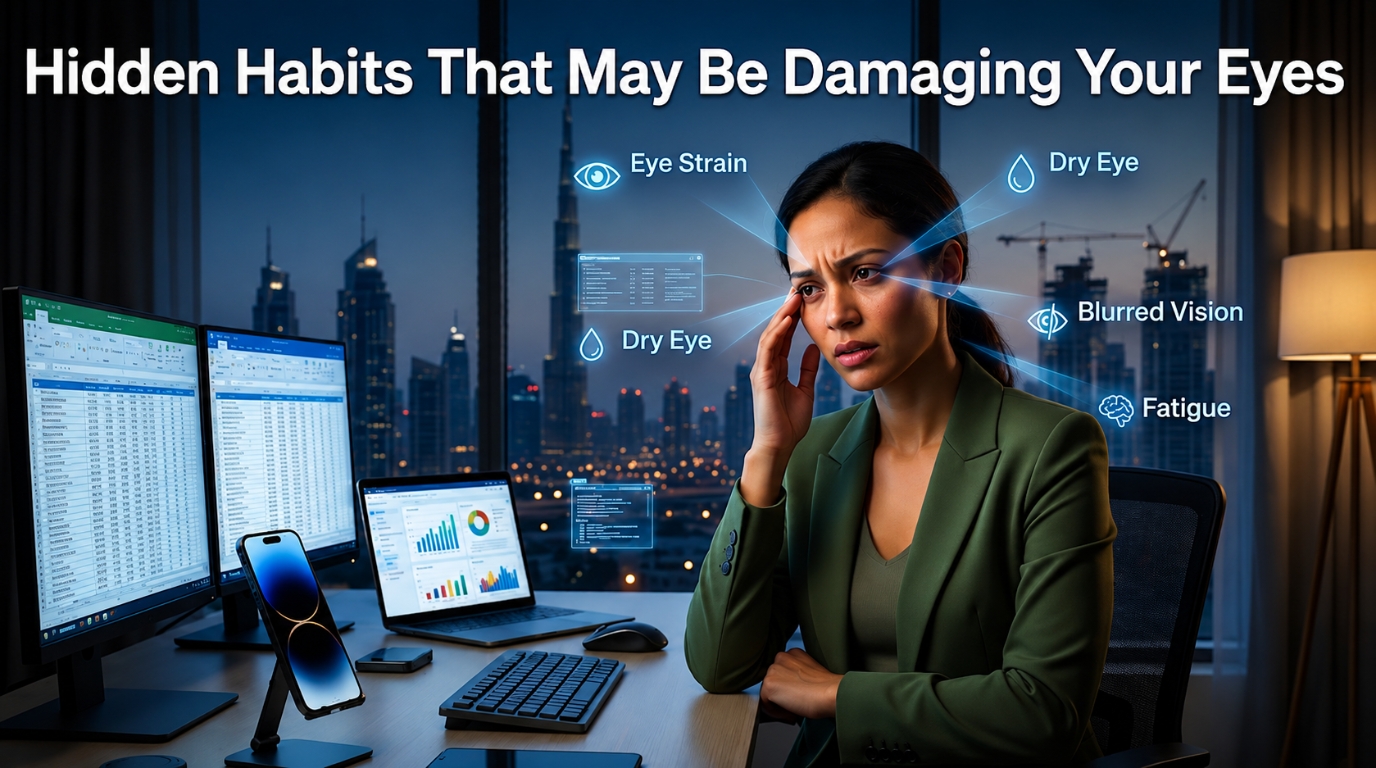
Many people associate eye problems with aging or genetics, but everyday habits can also have a significant impact on eye health. From spending long hours in front of screens to neglecting regular eye check-ups, small lifestyle choices can gradually affect your vision. The good news is that recognizing these habits early allows you to make simple changes that help protect your eyes for years to come.
Spending Too Much Time Looking at Screens
Computers, smartphones, tablets, and televisions have become part of daily life. While digital devices don’t permanently damage your eyesight, prolonged screen use can lead to digital eye strain.
Common symptoms include:
- Dry or watery eyes
- Blurred vision
- Eye fatigue
- Headaches
- Neck and shoulder discomfort
To reduce eye strain:
- Follow the 20-20-20 rule.
- Blink more frequently.
- Adjust screen brightness to match your surroundings.
- Position your screen about an arm’s length away.
Rubbing Your Eyes Frequently
Rubbing your eyes may provide temporary relief, but it can do more harm than good. Excessive rubbing may irritate the delicate surface of the eye and increase the risk of infection by transferring bacteria from your hands.
If your eyes feel itchy, consider possible causes such as allergies, dryness, or irritation rather than rubbing them repeatedly.
Skipping UV Protection
Many people wear sunglasses for comfort rather than protection. However, prolonged exposure to ultraviolet (UV) rays can increase the risk of several eye conditions over time.
Choose sunglasses that:
- Block 99%–100% of UVA and UVB rays
- Fit comfortably and cover the eyes well
- Are worn throughout the year, not just during summer
Sleeping with Contact Lenses
Sleeping in contact lenses that are not specifically designed for overnight wear reduces oxygen reaching the cornea and increases the risk of eye infections.
Good contact lens hygiene includes:
-
- Removing lenses before sleeping unless directed otherwise by your eye care professional.
- Cleaning and storing lenses properly.
- Replacing lenses according to the recommended schedule.
- Never sharing contact lenses with others.
Ignoring Dry Eye Symptoms
Occasional dryness is common, but persistent symptoms should not be ignored.
Signs of dry eyes include:
-
- Burning sensation
- Redness
- Grittiness
- Fluctuating vision
- Excessive tearing
Simple measures such as staying hydrated, using a humidifier, taking screen breaks, and discussing persistent symptoms with an eye care professional may help improve comfort.
Poor Nutrition
Your eyes depend on essential nutrients to function properly. A diet lacking vitamins and antioxidants may affect long-term eye health.
Include foods rich in:
-
- Vitamin A
- Vitamin C
- Vitamin E
- Zinc
- Omega-3 fatty acids
- Lutein and zeaxanthin
Leafy greens, carrots, citrus fruits, fish, eggs, nuts, and colorful vegetables are excellent additions to an eye-friendly diet.
Smoking and Excessive Alcohol
Smoking affects blood circulation throughout the body, including the eyes, and is associated with an increased risk of several eye diseases. Excessive alcohol consumption may also contribute to nutritional deficiencies that can affect eye health.
Reducing or quitting smoking benefits both overall health and vision.
Skipping Regular Eye Exams
Many eye diseases develop gradually without noticeable symptoms. Comprehensive eye examinations can detect changes before they begin affecting your vision.
Adults should have routine eye examinations based on their age, medical history, and individual risk factors.
Frequently Asked Questions
Can poor sleep affect eye health?
Yes. Inadequate sleep may contribute to eye fatigue, dryness, twitching, and difficulty focusing.
Is rubbing your eyes dangerous?
Occasional rubbing is usually harmless, but frequent or vigorous rubbing can irritate the eyes and increase the risk of infection or injury.
Do sunglasses really protect eye health?
Yes. Sunglasses that block both UVA and UVB rays help reduce long-term UV exposure and protect the eyes.
Quick Enquiry
Vision Care
- 10 Effective Ways to Protect Your Eyes from Sun Damage
- 5 Symptoms of Sun-Induced Eye Conditions That Require Medical Attention
- Beyond Sunglasses: Alternative Methods to Shield Your Eyes from the Sun
- Exploring the Advantages of Glaucoma Treatment in Dubai
- Exploring the Root Causes of Glaucoma
- How Intravitreal Injections Help Manage Diabetic Retinopathy
- How Intravitreal Injections Help Manage Diabetic Retinopathy
- How to Choose the Right Sunglasses for Maximum Eye Protection
- How to Choose UV-Protective Contact Lenses for Sun Safety
- How to Protect Your Eyes from the Sun While Driving
- How Your Heart Affects Your Eyes: The Hidden Connection
- Questions to Ask Your Ophthalmologist About Diabetic Retinopathy
- Recovery and Healing: What to Expect After Microincision Cataract Surgery
- Red Eyes After Sun Exposure: Should You Visit an Eye Specialist?
Author
Dr. Vasu Kumar
Vitreoretinal Surgeon | Head of Ophthalmology, NMC Royal Hospital FACS | FICO | FAICO
With expertise in vitreoretinal surgery and advanced eye care, he combines clinical experience with a patient-focused approach to managing complex retinal conditions. His work is centered on protecting vision, delivering precise treatment, and helping patients achieve better long-term eye health.