Eye Health Checklist for Every Age Group
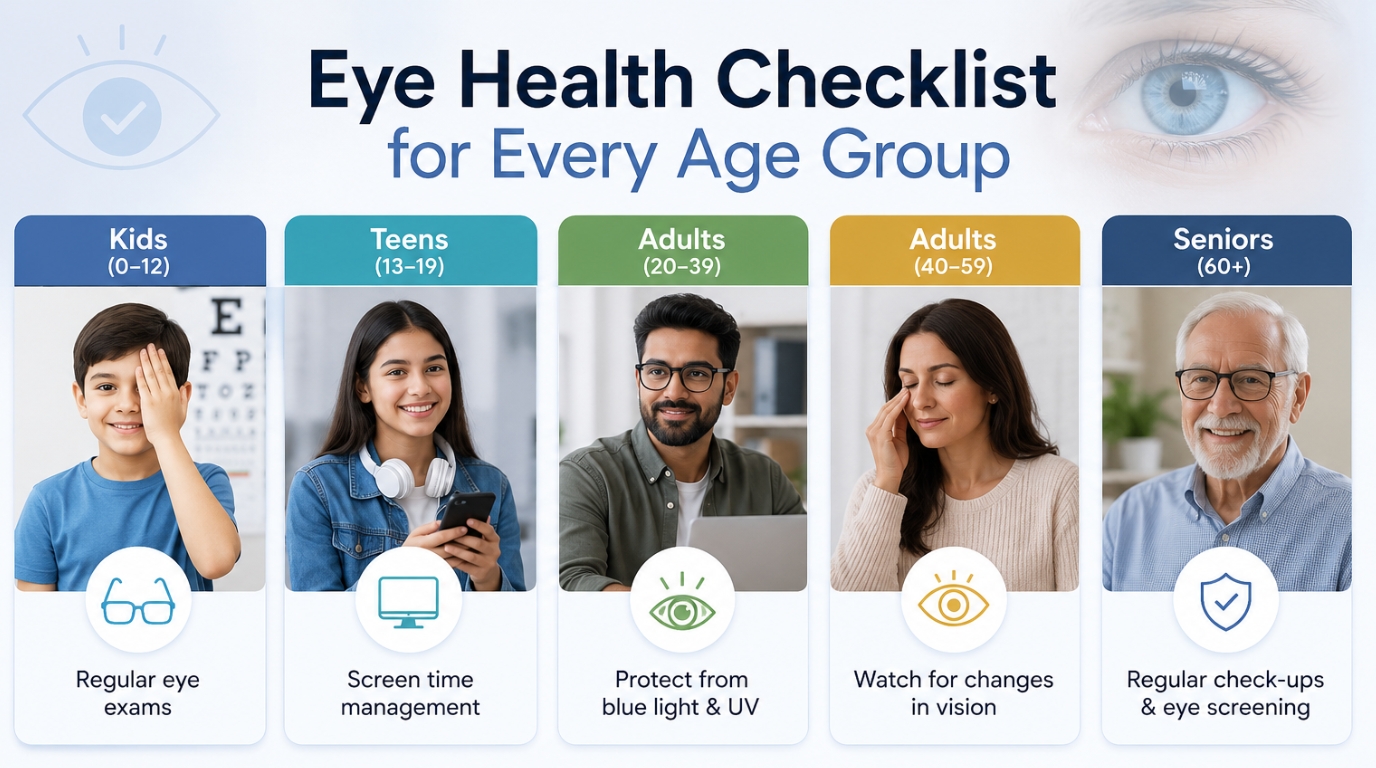
Good vision supports learning, work, independence, and overall quality of life. While your eyes naturally change with age, adopting healthy habits at every stage of life can help maintain vision and detect potential problems early. This eye health checklist outlines practical steps for children, teenagers, adults, and older adults to support lifelong eye health.
Eye Health Checklist for Children (0–12 Years)
Healthy vision is essential for a child’s growth and development. Since children may not recognize vision problems, regular eye examinations and observation are important.
Checklist
- Schedule age-appropriate eye examinations.
- Watch for signs of squinting, frequent eye rubbing, or sitting too close to screens.
- Encourage outdoor play to support healthy visual development.
- Limit recreational screen time and encourage regular breaks.
- Ensure children wear protective eyewear during sports and activities with a risk of eye injury.
- Provide a balanced diet rich in fruits, vegetables, dairy products, and whole grains.
Signs That Need Attention
Seek professional evaluation if your child experiences:
- Frequent headaches
- Difficulty reading
- Poor concentration
- One eye turning inward or outward
- Complaints of blurred or double vision
Eye Health Checklist for Teenagers (13–19 Years)
Teenagers often spend long hours using digital devices for school, entertainment, and social interaction.
Checklist
- Follow the 20-20-20 rule during screen use.
- Wear prescription glasses or contact lenses as recommended.
- Use protective eyewear during sports.
- Wear sunglasses outdoors.
- Avoid sleeping in contact lenses.
- Maintain healthy sleep habits.
Parents should also encourage regular eye examinations, especially if there is a family history of eye disease.
Eye Health Checklist for Adults (20–39 Years)
Busy work schedules often mean eye care is overlooked.
Checklist
-
- Schedule routine comprehensive eye examinations.
- Take regular breaks from digital screens.
- Blink frequently to reduce dry eyes.
- Wear UV-protective sunglasses.
- Maintain healthy blood pressure and blood sugar levels.
- Eat foods rich in vitamins A, C, E, lutein, zeaxanthin, and omega-3 fatty acids.
- Stay physically active.
Adults who wear contact lenses should follow proper hygiene and replacement schedules.
Eye Health Checklist for Middle-Aged Adults (40–59 Years)
Vision changes become more noticeable during this stage of life.
Checklist
-
- Monitor changes in near vision.
- Schedule regular comprehensive eye examinations.
- Discuss family history of glaucoma and other eye diseases with your eye care professional.
- Control chronic conditions such as diabetes and hypertension.
- Avoid smoking.
- Continue healthy nutrition and regular exercise.
This is an important time for early detection of cataracts, glaucoma, and age-related macular degeneration.
Eye Health Checklist for Older Adults (60 Years and Above)
The risk of age-related eye diseases increases with age, making regular monitoring essential.
Checklist
-
- Have comprehensive eye examinations as recommended.
- Monitor changes in vision, including difficulty reading or driving at night.
- Keep chronic medical conditions under control.
- Use appropriate lighting while reading and performing daily tasks.
- Wear sunglasses outdoors.
- Stay physically active to support overall circulation.
Seek immediate medical attention if you notice sudden vision loss, flashes of light, a sudden increase in floaters, or severe eye pain.
Eye Care Habits Everyone Should Follow
Regardless of age, these habits benefit overall eye health:
-
- Eat a nutrient-rich diet.
- Stay hydrated.
- Get adequate sleep.
- Avoid smoking.
- Protect your eyes from UV exposure.
- Wear safety glasses during hazardous activities.
- Practice good contact lens hygiene.
- Schedule routine eye examinations.
Frequently Asked Questions
How often should children have their eyes examined?
The recommended schedule varies depending on age, family history, and existing vision concerns. Your eye care professional can recommend the most appropriate timeline.
Can healthy habits reduce the risk of eye disease?
Healthy habits support overall eye health and may help lower the risk of certain eye conditions, although they cannot prevent all vision problems.
At what age do regular eye examinations become more important?
Eye examinations become increasingly important after age 40, as the risk of age-related eye diseases begins to rise.
Quick Enquiry
Vision Care
- 10 Effective Ways to Protect Your Eyes from Sun Damage
- 5 Symptoms of Sun-Induced Eye Conditions That Require Medical Attention
- Beyond Sunglasses: Alternative Methods to Shield Your Eyes from the Sun
- Exploring the Advantages of Glaucoma Treatment in Dubai
- Exploring the Root Causes of Glaucoma
- How Intravitreal Injections Help Manage Diabetic Retinopathy
- How Intravitreal Injections Help Manage Diabetic Retinopathy
- How to Choose the Right Sunglasses for Maximum Eye Protection
- How to Choose UV-Protective Contact Lenses for Sun Safety
- How to Protect Your Eyes from the Sun While Driving
- How Your Heart Affects Your Eyes: The Hidden Connection
- Questions to Ask Your Ophthalmologist About Diabetic Retinopathy
- Recovery and Healing: What to Expect After Microincision Cataract Surgery
- Red Eyes After Sun Exposure: Should You Visit an Eye Specialist?
Author
Dr. Vasu Kumar
Vitreoretinal Surgeon | Head of Ophthalmology, NMC Royal Hospital FACS | FICO | FAICO
With expertise in vitreoretinal surgery and advanced eye care, he combines clinical experience with a patient-focused approach to managing complex retinal conditions. His work is centered on protecting vision, delivering precise treatment, and helping patients achieve better long-term eye health.