At this point, the question is not “Do you have symptoms?” but rather “Are you checking in time?”
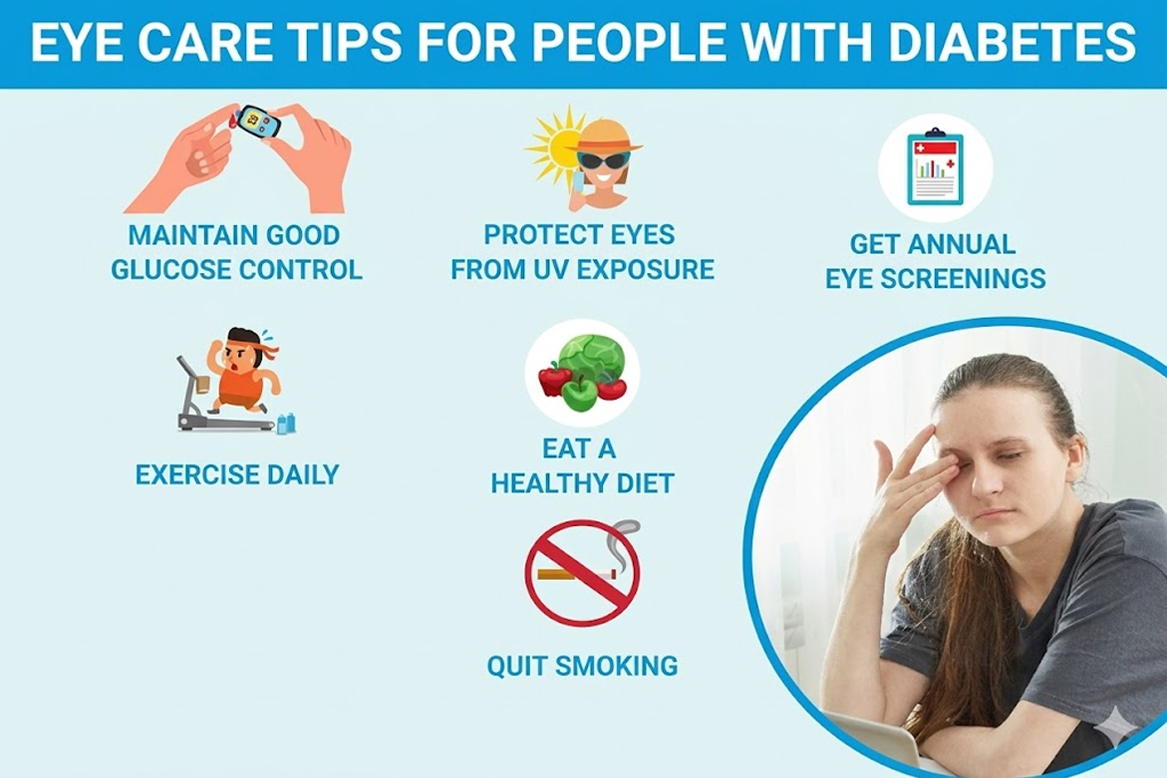
What should every diabetic patient actively focus on:
- Annual dilated eye exams to detect early retinal changes before vision is affected
- Strict blood sugar control (HbA1c levels) to slow down vascular damage
- Managing blood pressure and cholesterol, as they directly impact retinal health
- Watching for subtle signs like floaters, blurred vision, or difficulty seeing at night
- Healthy lifestyle habits including a nutrient-rich diet, exercise, and avoiding smoking
These aren’t just recommendations—they are protective measures that can literally save your vision.
Continuing with care, it’s important to understand that eye health in diabetes is not isolated—it reflects how well the entire condition is being managed. When blood sugar remains consistently high, it weakens vessel walls, causing leakage or blockage. In advanced stages, the eye may start forming abnormal blood vessels, which can lead to bleeding, retinal detachment, or permanent vision loss.
However, this is not where the story ends.
Modern ophthalmology has transformed the way diabetic eye diseases are treated. Today, highly targeted treatments such as anti-VEGF injections, laser therapy, and minimally invasive surgical procedures can stabilize and even improve vision—but only when the condition is detected early.
Timing, therefore, becomes everything.
Many patients delay eye check-ups because their vision “feels fine.” Unfortunately, by the time vision starts declining, the disease has often progressed significantly. On the other hand, patients who follow a structured screening routine often maintain stable vision for life, even with long-standing diabetes.
The takeaway is clear: managing diabetes without including eye care is incomplete.
Your eyes are not just another organ affected by diabetes—they are one of the most vulnerable. Protecting them requires intention, discipline, and regular monitoring. Because when vision is lost, it doesn’t just affect sight—it affects independence, confidence, and daily living.
Taking action today ensures that diabetes does not define how clearly you see tomorrow.