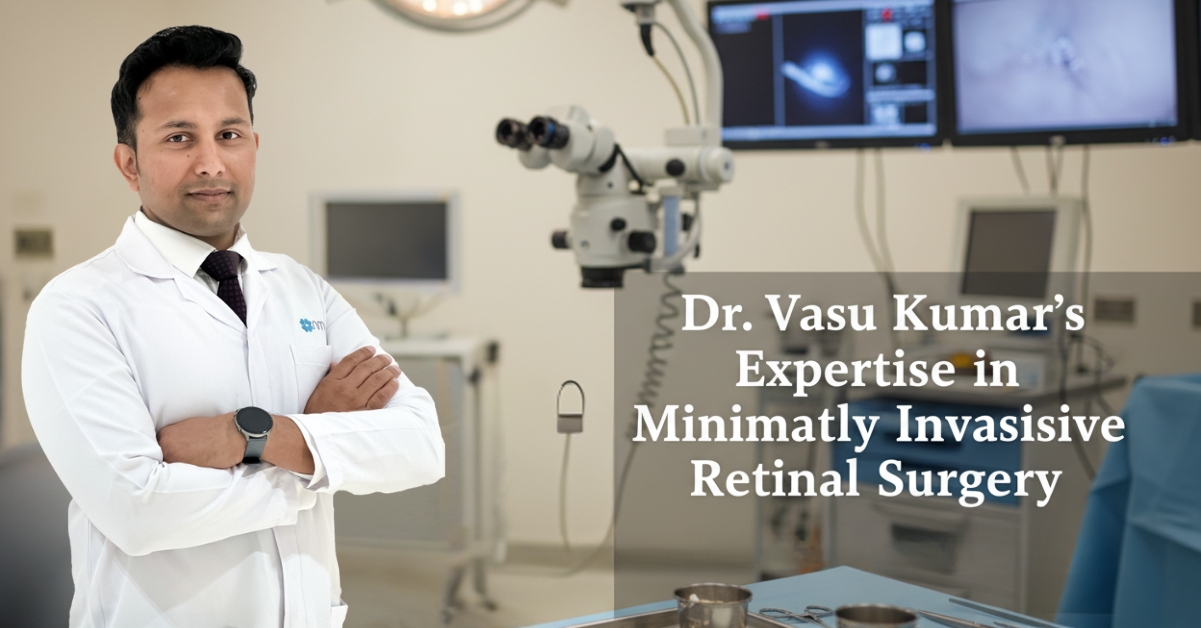
Dr. Vasu Kumar’s Expertise in Minimally Invasive Retinal Surgery
Spread the love
Retinal diseases require specialized assessment and highly precise surgical intervention. Minimally invasive retinal surgery has become the standard approach for improving safety and recovery timelines.
Dr. Vasu Kumar is recognized for expertise in microsurgical retina treatment using small-gauge vitrectomy systems and advanced visualization platforms.
What Is Minimally Invasive Retinal Surgery?
Retinal surgery typically requires accessing the delicate tissue layers located at the back of the eye. Minimally invasive retinal surgery uses 23–27 gauge instruments that create microincision openings rather than larger entry points.
This approach reduces stress on ocular structures and promotes faster healing.
Conditions Suitable for Minimally Invasive Surgery
Dr. Kumar performs minimally invasive techniques for:
retinal detachment
vitreous hemorrhage
macular holes
diabetic retinopathy complications
retained vitreous opacities
epiretinal membrane removal
The decision depends on clinical evaluation and imaging findings.
Key Advantages for Patients
Benefits of minimally invasive retinal surgery include:
smaller incisions
reduced risk of infection
less postoperative irritation
enhanced precision
faster healing time
reduced trauma to ocular tissues
Patients typically require shorter surgical duration and return to daily functioning faster when compared to traditional methods.
Technology Used in Procedures
Surgical accuracy is enhanced through:
3D visualization systems
digital microscopes
intraoperative laser delivery
high-speed vitrectomy instruments
real-time retinal imaging guidance
Recovery Expectations
Postoperative guidance includes rest, medication, and follow-up imaging over subsequent weeks. Patient-specific instructions ensure stable retinal attachment and safe visual recovery.
FAQs
What determines whether minimally invasive surgery is appropriate?
Diagnostic imaging and clinical assessment determine whether microsurgical entry points and technique will adequately correct the condition.
Will the patient experience pain after surgery?
Mild discomfort may occur initially but is managed effectively with medication and postoperative protocols.
Are results permanent?
Many minimally invasive procedures provide long-term retinal stabilization depending on the underlying health condition.
Vitreoretinal Surgeon | Head of Ophthalmology, NMC Royal Hospital
FACS | FICO | FAICO
With expertise in vitreoretinal surgery and advanced eye care, he combines clinical experience with a patient-focused approach to managing complex retinal conditions. His work is centered on protecting vision, delivering precise treatment, and helping patients achieve better long-term eye health.