Are Annual Eye Exams Enough? Here’s What You Need to Know
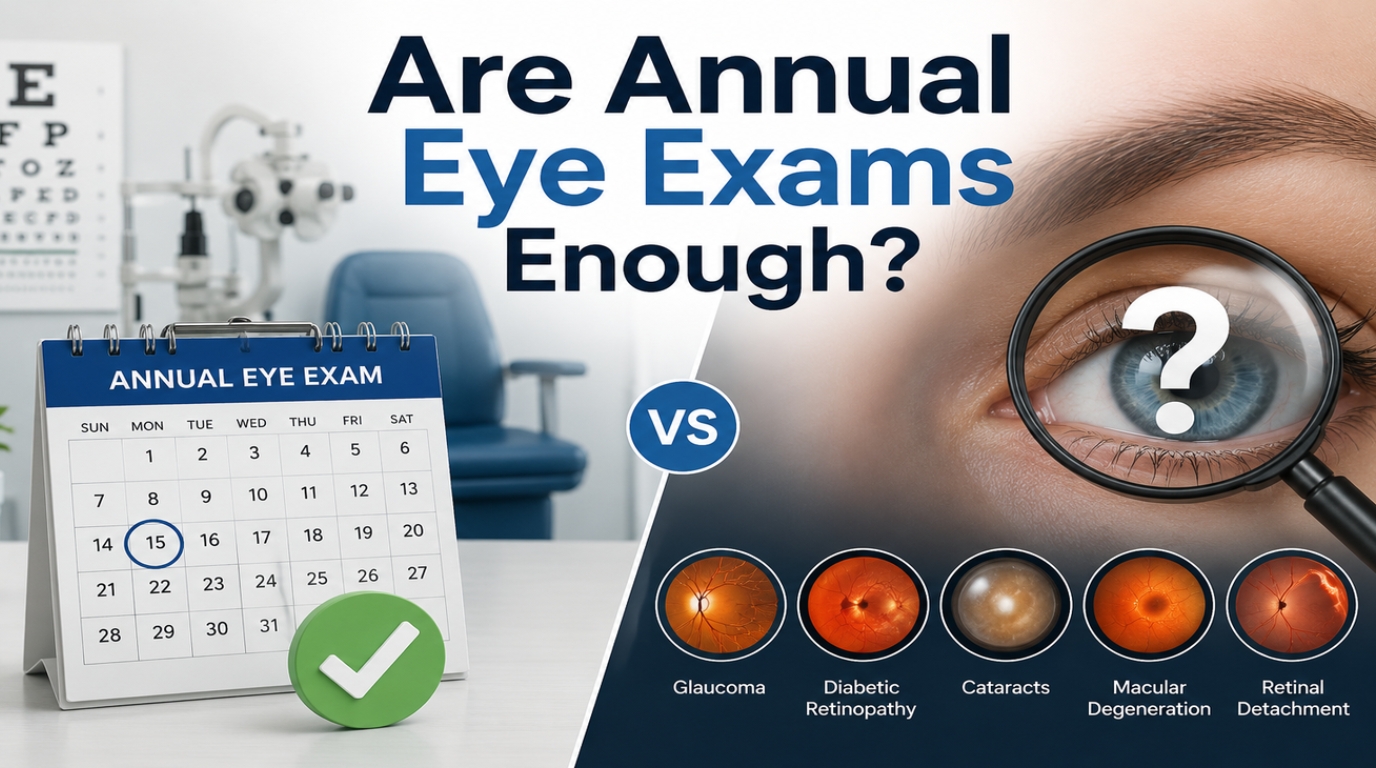
Many people assume that having an eye examination once a year is enough to maintain healthy vision. While annual eye exams are appropriate for many individuals, the ideal frequency depends on factors such as age, overall health, family history, and existing eye conditions. Regular eye examinations do more than update your glasses prescription—they help detect eye diseases early, often before noticeable symptoms appear.
Why Regular Eye Exams Matter
Many common eye conditions develop gradually and may not cause pain or obvious vision changes in their early stages. Comprehensive eye examinations allow eye care professionals to monitor your vision and identify potential concerns before they progress.
Routine eye exams can help detect:
- Changes in vision and prescription
- Cataracts
- Glaucoma
- Age-related macular degeneration
- Diabetic eye disease
- Retinal abnormalities
- Dry eye disease
Early diagnosis often provides more treatment options and may help preserve vision.
Is an Annual Eye Exam Right for Everyone?
The answer depends on your individual circumstances.
Children
Children should have age-appropriate eye examinations to monitor vision development and identify problems that may affect learning and daily activities.
Healthy Adults
Adults with healthy eyes and no significant risk factors may be advised to have routine comprehensive eye examinations at intervals recommended by their eye care professional. For many people, annual visits are appropriate, while others may require less frequent monitoring.
Adults Over 40
Beginning around age 40, natural changes in vision become more common. Reading may become more difficult, and the risk of age-related eye diseases gradually increases.
Regular examinations become increasingly important during this stage of life to monitor changes and detect eye conditions early.
Older Adults
Adults over 60 often require more frequent monitoring because the likelihood of developing cataracts, glaucoma, and macular degeneration increases with age.
Your eye care professional will recommend an examination schedule based on your eye health and medical history.
Medical Conditions That May Require More Frequent Eye Exams
Some health conditions increase the risk of eye complications and may require closer monitoring.
These include:
- Diabetes
- High blood pressure
- Autoimmune diseases
- High cholesterol
- Thyroid disorders
People taking medications that may affect vision should also discuss appropriate eye examination intervals with their healthcare provider.
Family History Matters
Certain eye diseases have a hereditary component.
If close family members have been diagnosed with conditions such as glaucoma or macular degeneration, you may benefit from more frequent comprehensive eye examinations, even if your current vision seems normal.
Sharing your family medical history with your eye care professional helps determine the most appropriate screening schedule.
Signs You Shouldn’t Wait for Your Next Eye Exam
Even if you recently had an eye examination, certain symptoms require prompt medical evaluation.
Seek professional care if you experience:
- Sudden vision loss
- Flashes of light
- A sudden increase in floaters
- Persistent blurred vision
- Double vision
- Severe eye pain
- Redness accompanied by pain or vision changes
- Eye injury or chemical exposure
Ignoring these symptoms could delay treatment for potentially serious conditions.
What Happens During a Comprehensive Eye Exam?
A routine eye examination may include several assessments depending on your age, symptoms, and medical history.
These may include:
- Vision testing
- Prescription assessment
- Eye pressure measurement
- Examination of the front and back of the eye
- Evaluation of eye movements and focusing ability
- Assessment of retinal and optic nerve health
These evaluations provide valuable information about both your eye health and, in some cases, your overall health.
Tips for Maintaining Healthy Vision Between Eye Exams
Regular eye examinations are only one part of maintaining healthy vision.
Support your eye health by:
- Wearing sunglasses that block UVA and UVB rays.
- Eating a balanced diet rich in fruits, vegetables, and omega-3 fatty acids.
- Managing chronic conditions such as diabetes and hypertension.
- Taking regular breaks during screen use.
- Staying physically active.
- Getting enough sleep.
- Avoiding smoking.
- Wearing protective eyewear during sports and hazardous work.
Healthy daily habits, combined with routine professional eye care, can help support good vision throughout life.
Frequently Asked Questions
Can I skip my eye exam if my vision seems normal?
Not necessarily. Some eye diseases develop without noticeable symptoms, making routine examinations important even when your vision appears unchanged.
How long does a comprehensive eye examination take?
The duration varies depending on the tests performed and whether additional evaluations, such as pupil dilation, are needed. Most appointments are completed within 30 to 60 minutes.
Do I need an eye exam if I don’t wear glasses?
Yes. Eye examinations assess more than vision correction—they also evaluate the overall health of your eyes and can detect conditions that may not cause early symptoms.
Can an eye exam detect other health problems?
In some cases, changes within the eye may provide signs of underlying health conditions such as diabetes, high blood pressure, or certain autoimmune diseases. Your eye care professional may recommend further medical evaluation if needed.
Quick Enquiry
Vision Care
- 10 Effective Ways to Protect Your Eyes from Sun Damage
- 5 Symptoms of Sun-Induced Eye Conditions That Require Medical Attention
- Beyond Sunglasses: Alternative Methods to Shield Your Eyes from the Sun
- Exploring the Advantages of Glaucoma Treatment in Dubai
- Exploring the Root Causes of Glaucoma
- How Intravitreal Injections Help Manage Diabetic Retinopathy
- How Intravitreal Injections Help Manage Diabetic Retinopathy
- How to Choose the Right Sunglasses for Maximum Eye Protection
- How to Choose UV-Protective Contact Lenses for Sun Safety
- How to Protect Your Eyes from the Sun While Driving
- How Your Heart Affects Your Eyes: The Hidden Connection
- Questions to Ask Your Ophthalmologist About Diabetic Retinopathy
- Recovery and Healing: What to Expect After Microincision Cataract Surgery
- Red Eyes After Sun Exposure: Should You Visit an Eye Specialist?
Author
Dr. Vasu Kumar
Vitreoretinal Surgeon | Head of Ophthalmology, NMC Royal Hospital FACS | FICO | FAICO
With expertise in vitreoretinal surgery and advanced eye care, he combines clinical experience with a patient-focused approach to managing complex retinal conditions. His work is centered on protecting vision, delivering precise treatment, and helping patients achieve better long-term eye health.