How Stress Can Affect Your Vision
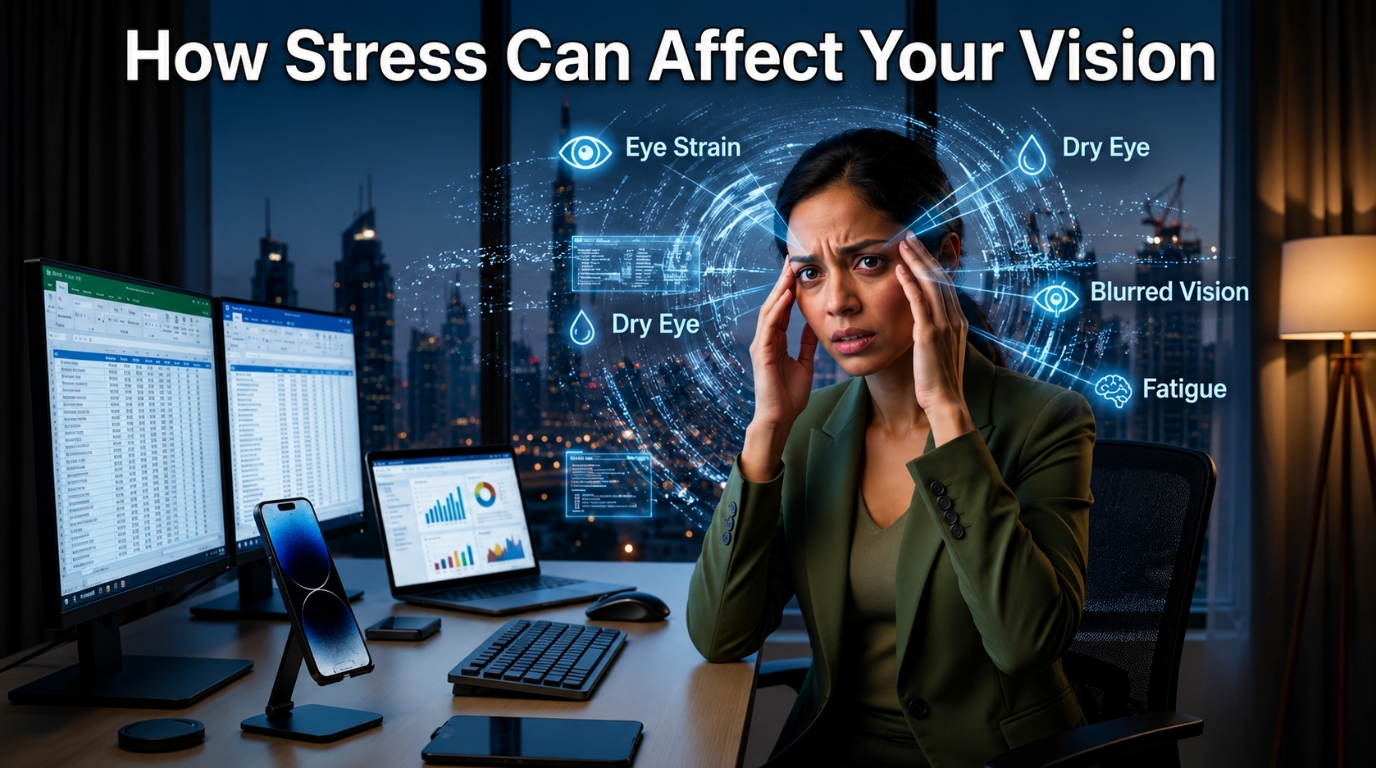
Stress affects nearly every system in the body, including your eyes. While stress itself does not usually cause permanent vision loss, it can contribute to a variety of temporary eye-related symptoms and may worsen existing eye conditions. Understanding the connection between stress and eye health can help you recognize symptoms early and adopt habits that support both your mental well-being and your vision.
How Does Stress Affect the Eyes?
When you’re stressed, your body releases hormones such as cortisol and adrenaline. These hormones trigger the body’s “fight or flight” response, increasing heart rate, blood pressure, and muscle tension.
This response can also affect the eyes by altering tear production, increasing muscle tension around the eyes, and contributing to visual discomfort.
Common Vision Symptoms Linked to Stress
Stress may contribute to symptoms such as:
- Eye fatigue
- Dry eyes
- Blurred vision
- Eye twitching
- Increased sensitivity to light
- Difficulty concentrating
- Headaches around the eyes
These symptoms are often temporary and improve as stress levels decrease.
Can Stress Cause Blurred Vision?
Some people experience temporary blurred vision during periods of intense stress or anxiety. This may result from changes in tear production, eye muscle tension, or difficulty focusing.
However, sudden or persistent blurred vision should never be ignored, as it may indicate an underlying eye or medical condition that requires prompt evaluation.
Why Does Stress Cause Eye Twitching?
Eye twitching, also known as eyelid twitching, is a common response to stress.
Other contributing factors include:
- Fatigue
- Lack of sleep
- Excessive caffeine intake
- Prolonged screen time
Most eyelid twitches are harmless and resolve on their own within a few days.
Stress and Dry Eyes
Stress may contribute to dry eye symptoms by affecting normal tear production and encouraging prolonged screen use, during which people tend to blink less frequently.
Symptoms may include:
- Burning sensation
- Grittiness
- Redness
- Watery eyes
- Temporary blurred vision
Taking regular screen breaks and staying hydrated may help improve comfort.
Can Stress Worsen Existing Eye Conditions?
Although stress is not considered a direct cause of common eye diseases, it may make certain symptoms more noticeable or difficult to manage.
Individuals with chronic dry eye disease, migraines, or other health conditions may notice symptom flare-ups during stressful periods.
Managing stress can therefore play an important role in overall well-being.
Tips to Reduce Stress-Related Eye Discomfort
Simple lifestyle habits may help reduce eye strain associated with stress:
- Take regular breaks from digital devices.
- Practice relaxation techniques such as deep breathing or meditation.
- Get 7 to 9 hours of quality sleep each night.
- Stay physically active.
- Eat a balanced diet.
- Stay hydrated throughout the day.
- Limit excessive caffeine if it appears to trigger symptoms.
- Maintain a healthy work-life balance whenever possible.
When Should You Seek Medical Advice?
Stress-related eye symptoms are often temporary, but some symptoms require immediate attention.
Consult an eye care professional promptly if you experience:
- Sudden vision loss
- Persistent blurred vision
- Severe eye pain
- Double vision
- Flashes of light
- A sudden increase in floaters
Early evaluation helps identify whether symptoms are related to stress or another underlying eye condition.
Frequently Asked Questions
Can anxiety affect eyesight?
Anxiety may contribute to temporary symptoms such as blurred vision, eye fatigue, light sensitivity, and difficulty focusing. Persistent or sudden vision changes should always be evaluated by a healthcare professional.
Is eye twitching caused by stress?
Stress is one of several common triggers for eyelid twitching, along with fatigue, caffeine, and prolonged screen use.
Can relaxation improve eye comfort?
Reducing stress, getting adequate sleep, and taking regular screen breaks may help relieve stress-related eye discomfort and support overall eye health.
Quick Enquiry
Vision Care
- 10 Effective Ways to Protect Your Eyes from Sun Damage
- 5 Symptoms of Sun-Induced Eye Conditions That Require Medical Attention
- Beyond Sunglasses: Alternative Methods to Shield Your Eyes from the Sun
- Exploring the Advantages of Glaucoma Treatment in Dubai
- Exploring the Root Causes of Glaucoma
- How Intravitreal Injections Help Manage Diabetic Retinopathy
- How Intravitreal Injections Help Manage Diabetic Retinopathy
- How to Choose the Right Sunglasses for Maximum Eye Protection
- How to Choose UV-Protective Contact Lenses for Sun Safety
- How to Protect Your Eyes from the Sun While Driving
- How Your Heart Affects Your Eyes: The Hidden Connection
- Questions to Ask Your Ophthalmologist About Diabetic Retinopathy
- Recovery and Healing: What to Expect After Microincision Cataract Surgery
- Red Eyes After Sun Exposure: Should You Visit an Eye Specialist?
Author
Dr. Vasu Kumar
Vitreoretinal Surgeon | Head of Ophthalmology, NMC Royal Hospital FACS | FICO | FAICO
With expertise in vitreoretinal surgery and advanced eye care, he combines clinical experience with a patient-focused approach to managing complex retinal conditions. His work is centered on protecting vision, delivering precise treatment, and helping patients achieve better long-term eye health.