Can You Watch TV or Use a Mobile Phone After Cataract Surgery?
Spread the love
Cataract surgery is a common and highly successful procedure performed across Dubai to restore clear vision. However, one of the most frequently asked questions post-surgery is: “Can I watch TV or use my mobile phone after cataract surgery?”
While these activities are part of daily life—especially in our digitally connected city—eye specialists, including Dr. Vasu Kumar of Retina Care Dubai, advise a balanced approach for optimal recovery.
This blog explains what to expect and how to safely use screens after your surgery, with expert tips tailored for residents of Dubai.
What Happens to Your Eyes After Cataract Surgery?
Cataract surgery involves replacing the eye’s cloudy natural lens with a clear artificial intraocular lens (IOL). After surgery, the eye enters a healing phase, which typically lasts from a few days to several weeks. During this time, your vision may fluctuate as your eye adjusts to the new lens.
Common Sensations in the First Few Days Include:
Blurred or fluctuating vision
Light sensitivity
Mild discomfort or dryness
Because of these temporary symptoms, your eye doctor may give specific advice on limiting screen exposure, especially in the first 24–48 hours.
Watching TV After Cataract Surgery
Is It Safe to Watch TV After Surgery?
Yes, you canwatch television after cataract surgery—but moderation is key.
Why Limit It Initially?
TV screens emit bright light that can increase eye strain.
Continuous staring without blinking may worsen dryness.
Some patients feel fatigued or sensitive to light post-surgery, especially in brightly lit living rooms.
Guidelines for Watching TV:
Wait 24–48 hours before watching for extended periods.
Use ambient lighting in the room to reduce glare.
Keep your eyes lubricated with doctor-recommended eye drops.
Take breaks every 20–30 minutes
Dubai tip: If you’re watching regional content or TV shows with subtitles, avoid squinting to read. Adjust the text size or brightness to make it more comfortable.
Using a Mobile Phone After Cataract Surgery
Can You Use a Mobile Phone After Surgery?
Mobile use is generally safe within a day or two after surgery—but overuse can lead to eye fatigue, especially when held too close to your face.
Why Mobile Screens Are More Straining:
Small screen size requires more focus
Blue light from screens may delay healing or disturb sleep
Phones are often used at night, which can trigger glare
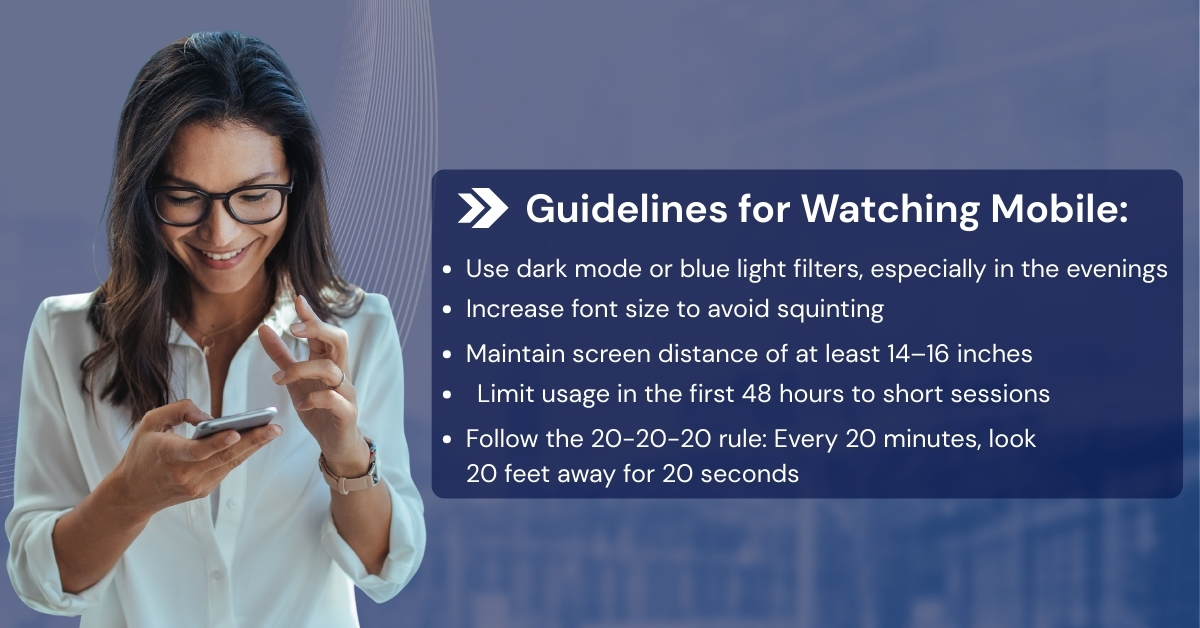
Safe Usage Tips:
Use dark mode or blue light filters, especially in the evenings
Increase font size to avoid squinting
Maintain screen distance of at least 14–16 inches
Follow the 20-20-20 rule: Every 20 minutes, look 20 feet away for 20 seconds
Limit usage in the first 48 hours to short sessions
Real-Life Scenario: Dubai Working Professionals
In a tech-driven city like Dubai, many patients return to screen-heavy jobs quickly after surgery. One example is office professionals who rely on mobile phones and laptops for work communication. For them, it’s essential to follow a structured screen break schedule and apply prescribed eye drops regularly.
If your profession involves long hours in front of a screen, ask your ophthalmologist for tailored advice before returning to work.
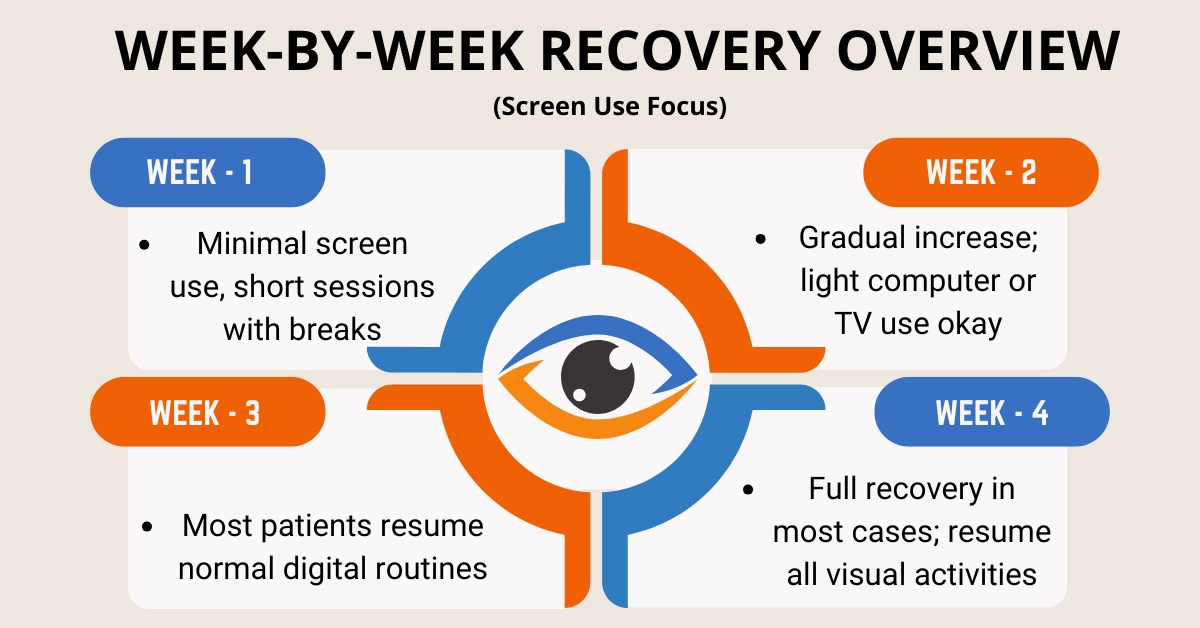
Week-by-Week Recovery Overview (Screen Use Focus)
Week
Activity Recommendation
1
Minimal screen use, short sessions with breaks
2
Gradual increase; light computer or TV use okay
3
Most patients resume normal digital routines
4
Full recovery in most cases; resume all visual activities
When to Be Cautious
Contact your doctor if screen use causes:
Sharp or sudden eye pain
Excessive watering or dryness
Persistent blurred vision
Headaches or nausea
Sensitivity to light or seeing halos around lights
Difficulty focusing or double vision that doesn’t go away
These could be signs of eye strain or complications needing evaluation.
Final Thoughts: A Balanced Approach Matters
While modern cataract surgery has a quick recovery, giving your eyes time to heal is key to long-term visual clarity. Watching TV or using your mobile phone is generally safe—as long as it’s done with caution, especially during the first week.
Dubai residents should also be mindful of dry indoor air (due to AC use)bright sunlight, and dusty outdoor conditions, which can further irritate the eyes. Protective sunglasses and regular hydration go a long way.
Vitreoretinal Surgeon | Head of Ophthalmology, NMC Royal Hospital
FACS | FICO | FAICO
With expertise in vitreoretinal surgery and advanced eye care, he combines clinical experience with a patient-focused approach to managing complex retinal conditions. His work is centered on protecting vision, delivering precise treatment, and helping patients achieve better long-term eye health.